


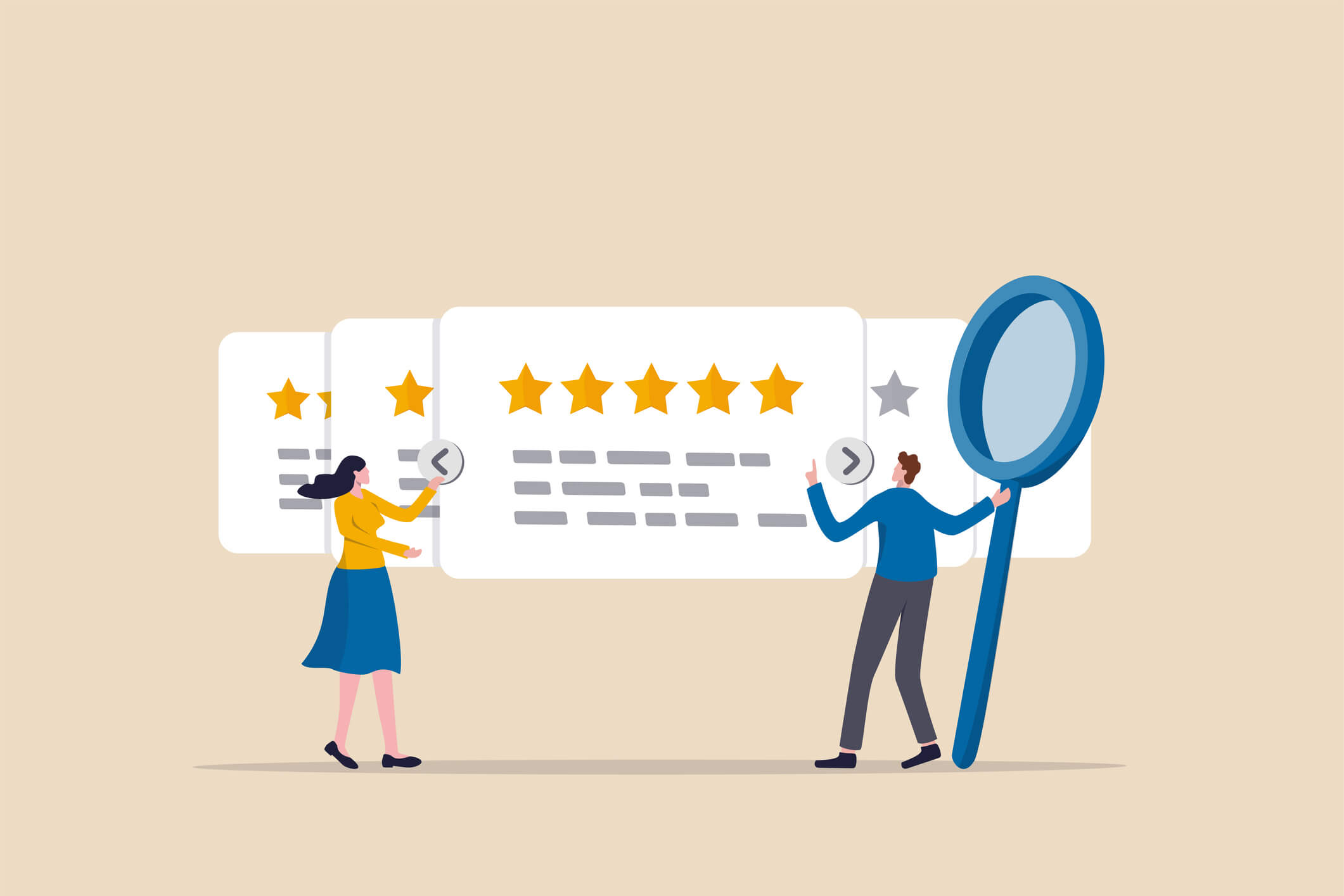
Customer Experience Management:
Boost Customer Loyalty
Customer Experience Management is the discipline of designing, monitoring, and improving every interaction across the customer journey so you can deliver seamless, personalized experiences that increase satisfaction, deepen trust, and drive long-term loyalty. It spans every touchpoint—from the first ad a prospect sees to the renewal email they receive three years later—and uses feedback, analytics, and cross-team collaboration to turn ordinary transactions into reasons customers stay.
Here’s a stat that stopped me in my tracks: 86% of buyers say they’ll pay more for a better customer experience, with U.S. consumers willing to pay an average of 17% more, according to Harvard Business Review. After 20+ years leading Complete Controller and partnering with thousands of businesses across nearly every industry imaginable, I can tell you with certainty: loyalty isn’t bought with discounts—it’s earned through experience. In this article, I’ll walk you through how to build a CXM system that strengthens retention, sharpens your competitive edge, and turns happy clients into your loudest advocates—even if you don’t have an enterprise budget.

What is customer experience management and how does it boost customer loyalty?
- Customer Experience Management is the practice of intentionally designing, measuring, and improving every customer interaction to grow satisfaction, trust, and loyalty across the full journey.
- It covers every touchpoint—digital, human, and product-based—so the experience feels consistent no matter where customers engage.
- Strong CXM reduces friction and emotional drop-offs, which directly fuels repeat purchases and referrals.
- It relies on feedback loops, experience analytics, and journey mapping to uncover and fix pain points before they cause churn.
- Done well, CXM lifts customer lifetime value (CLV), lowers acquisition costs, and creates a moat competitors can’t easily cross.
What Is Customer Experience Management (CXM)?
Customer Experience Management is a company-wide strategy for planning, delivering, and refining every interaction a customer has with your brand. It’s less about a single department and more about a shared mindset: every team—from marketing to accounting services to support—plays a role in how customers feel about doing business with you.
The companies that win at CXM treat experience as a discipline, not an afterthought. They map it, measure it, and improve it the same way they manage cash flow or inventory.
Core components of effective customer experience management
A strong CXM foundation includes four building blocks that work together:
- Customer-centric strategy & culture — Leadership, hiring, and incentives all point toward delivering great experiences, not just hitting quotas.
- Customer feedback management & VoC programs — Structured systems for collecting reviews, survey data, and support insights.
- Experience analytics & CX metrics — CSAT, NPS, CES, churn, and CLV that tie experience to revenue.
- Cross-functional collaboration — Sales, service, ops, and finance share one view of the customer.
Disney offers one of the clearest examples of CXM culture in action. Employees use “onstage” and “backstage” language—staying fully in character with guests onstage while handling logistics and problems backstage. The Disney Institute built an entire training philosophy around this idea, and it’s why a trip to Disney feels effortless even when the operational machinery behind it is enormous.
How Customer Experience Management Drives Loyalty, Retention, and Growth
Customer Experience Management directly strengthens loyalty by reducing friction, adding value, and building emotional trust at the moments that matter most. Research published in the Journal of Asian Business and Economic Studies confirms a strong positive link between CXM practices and customer loyalty behaviors—meaning the better your experience, the longer your customers stay.
And it’s not just about retention. Remember that HBR data point? Customers will pay 17% more for a better experience. That means CXM isn’t a cost center—it’s a margin booster.
The loyalty engine: From satisfaction to advocacy
Loyal customers don’t just renew. They:
- Buy more often and across more product lines
- Tolerate occasional missteps because trust is established
- Refer new business at a rate paid acquisition can’t match
- Provide candid feedback that fuels continuous improvement
Proactive customer success management—guiding customers toward outcomes rather than waiting for complaints—is one of the strongest loyalty levers I’ve seen in subscription and service businesses.
Measuring loyalty: NPS, CSAT, and CES
You can’t improve what you don’t measure. The three metrics I recommend every small business track:
- NPS surveys measure willingness to recommend (the closest proxy for loyalty)
- CSAT tracking captures satisfaction right after specific interactions
- CES (Customer Effort Score) reveals how easy you are to do business with—often the strongest predictor of churn

Customer Journey Optimization: Designing Frictionless Paths
Customer journey optimization means mapping every step a customer takes with you, then deliberately removing the friction. It’s the difference between hoping the experience is good and engineering it to be.
When I look back at our own growth at Complete Controller, the biggest loyalty gains came not from new features, but from removing small frustrations clients didn’t even realize were grinding on them.
Customer journey mapping for CXM
A useful journey map captures:
- Stages — awareness, consideration, purchase, onboarding, ongoing use, renewal, advocacy
- Touchpoints — every channel and interaction at each stage
- Emotions — what customers feel and where they get stuck
- Moments of truth — the high-stakes interactions that make or break loyalty
Turning journey insights into action
Once you’ve mapped the journey, prioritize ruthlessly. Score each opportunity by loyalty impact and feasibility, then build a focused 90-day roadmap. Strengthen incident and issue resolution first—because nothing kills loyalty faster than a problem handled poorly. Predictive churn modeling, which combines behavioral signals with CX metrics, helps you reach at-risk customers before they walk.
Omnichannel Experience Management: Consistency Across Every Touchpoint
Omnichannel experience management makes sure customers get a seamless, consistent experience across web, mobile, phone, email, and in-person channels—without repeating themselves. The difference between multichannel and omnichannel is context: in true omnichannel, the conversation continues wherever the customer goes.
Building omnichannel support that feels effortless
Speed matters more than most leaders realize. Microsoft’s Global State of Customer Service found that 90% of consumers consider an immediate response important when they have a service question—and 60% define “immediate” as 10 minutes or less.
To deliver that kind of responsiveness without burning out your team:
- Match staffing and tools to the channels your customers actually prefer
- Blend self-service (knowledge bases, chatbots) with human support for high-emotion issues
- Standardize tone, response times, and resolution processes across every channel
Using Customer Feedback and Experience Analytics to Continuously Improve
Customer feedback management and experience analytics give you real-time insight into how customers feel—before loyalty quietly erodes. A solid VoC (Voice of Customer) program blends surveys, interviews, social listening, and support transcripts to capture both numbers and nuance.
The most underrated step? Closing the loop. When you respond to feedback, explain the fix, and tell customers what changed, you transform a survey into a trust-building moment.
Experience analytics for smarter decisions
Blend CSAT, NPS, CES, and behavioral data into segment-level views so you can spot which experiences drive retention and which quietly drive customers away. Build a simple executive dashboard, then commit to a monthly CX review where leadership actually makes decisions based on it. For more on weaving analytics into your operating rhythm, see our guide to financial reporting and business analytics.
A Practical CXM Playbook for Small and Mid-Sized Businesses
You don’t need an enterprise budget to deliver standout experiences. Here’s a 90-day plan I’ve recommended to dozens of SMB clients:
- Days 1–30: Listen and map. Interview 10–15 customers, sketch journey maps for your top segments, and launch basic NPS and CSAT surveys.
- Days 31–60: Fix the top three friction points. Think clearer invoices, faster email turnaround, simpler onboarding.
- Days 61–90: Standardize and measure. Document SOPs, formalize your VoC program, and start a monthly CX review meeting.
A lean CX stack—CRM with support module, a survey tool, shared knowledge base, and a simple dashboard—will get you 80% of the value the enterprise systems deliver.
Final Thoughts: Make CXM Your Most Reliable Loyalty Strategy
After two decades of watching businesses rise, plateau, and reinvent themselves, I can tell you the ones that endure share a common trait: they treat customer experience as seriously as they treat their financials. Better journeys, faster support, and earned trust outlast every price war and feature race.
Start small. Map one journey. Launch one survey. Fix one high-impact friction point in the next 30 days. Then do it again. That’s how loyalty compounds.
If you’d like help building the systems—financial, operational, and experiential—that keep clients coming back, visit Complete Controller and let’s talk. My team and I would love to help you build something customers won’t want to leave.

Frequently Asked Questions About Customer Experience Management
What is customer experience management (CXM)?
Customer Experience Management is the practice of intentionally designing, measuring, and improving all interactions a customer has with your company to grow satisfaction, loyalty, and advocacy across the full journey.
What is the role of customer experience management?
CXM’s role is to align people, processes, technology, and data around delivering consistent, positive experiences that differentiate your brand, reduce churn, and drive sustainable revenue growth.
What are the 3 main components of customer experience?
The three core components are the customer journey and touchpoints, the emotional and functional experience at each step, and the organizational systems (people, processes, tech) that enable or hinder that experience.
What are the types of customer experience?
The main types include digital experience (web, mobile, apps), human-assisted experience (phone, chat, in-person), and product or service experience (using the product and achieving outcomes). Together they shape overall brand perception.
Why is customer experience management so important for businesses today?
Because customers have more choices and lower switching costs than ever, CXM is critical for retention, lifetime value, and building a competitive advantage rooted in trust and ease—not just price.
Sources
- Appinio. (2026). Customer Experience Management (CXM): Strategy, Software & Best Practices. https://www.appinio.com
- CustomerGauge. (2026). Customer Experience Management Strategy: Complete Guide (2026). https://customergauge.com
- Harvard Business Review. (2023). Customer Experience Management Strategies for Brand Loyalty. https://hbr.org/topic/customer-experience
- Van Belleghem, Steven. (2015). Customers Will Pay More for a Better Customer Experience. Harvard Business Review. https://hbr.org/2015/10/customers-will-pay-more-for-a-better-customer-experience
- Heretto. (2023). A Content-First Guide to Customer Experience Management. https://heretto.com
- Journal of Asian Business and Economic Studies. (2021). Augmenting Customer Loyalty through Customer Experience Management. Vol. 28, No. 3.
- Microsoft. (2017). Global State of Customer Service. Microsoft Dynamics 365. https://info.microsoft.com/rs/157-GQE-382/images/EN-CNTNT-Report-DynService-GlobalStateCustomerService.pdf
- OpenText. (2024). What Is Customer Experience Management? https://www.opentext.com
- PeopleMetrics. (2022). What Is Customer Experience? Complete Introduction to CX. https://www.peoplemetrics.com
- Qualaroo. (2025). Customer Experience Management – Tips, Strategies & Steps. https://qualaroo.com
- Smaply. (2023). Customer Experience Management. https://www.smaply.com
- TTEC. (2022). Customer Experience Management Strategy and Best Practices. https://www.ttec.com
- The Walt Disney Company. (n.d.). Disney Institute: Think Differently. https://www.disneyinstitute.com/blog/think-differently/
 About Complete Controller® – America’s Bookkeeping Experts Complete Controller is the Nation’s Leader in virtual bookkeeping, providing service to businesses and households alike. Utilizing Complete Controller’s technology, clients gain access to a cloud platform where their QuickBooks™️ file, critical financial documents, and back-office tools are hosted in an efficient SSO environment. Complete Controller’s team of certified US-based accounting professionals provide bookkeeping, record storage, performance reporting, and controller services including training, cash-flow management, budgeting and forecasting, process and controls advisement, and bill-pay. With flat-rate service plans, Complete Controller is the most cost-effective expert accounting solution for business, family-office, trusts, and households of any size or complexity.




 Brittany McMillen
Brittany McMillen
Brittany McMillen