


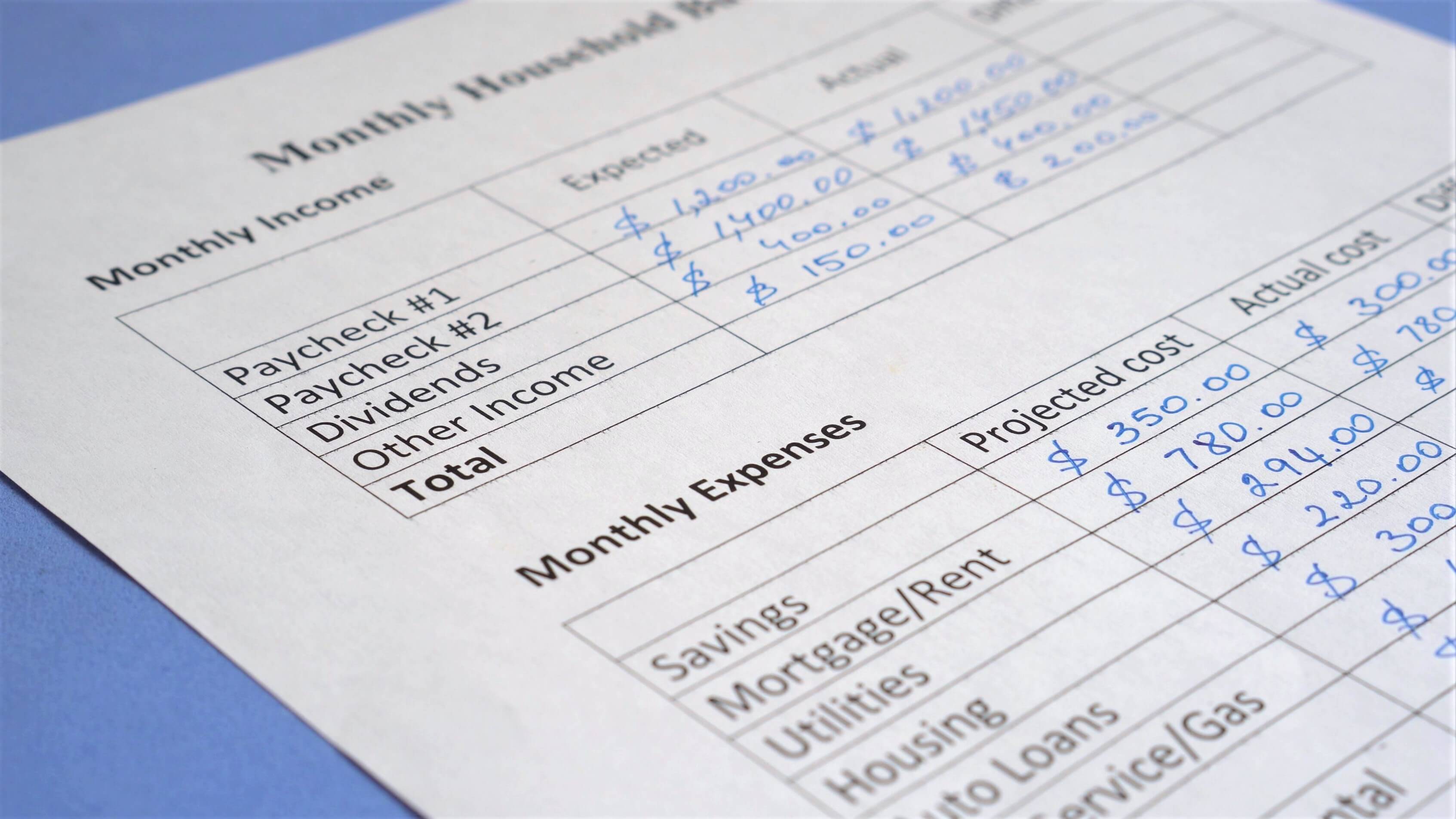
My First Budget Worksheet:
Simple Template for Beginners
A first budget worksheet is a one-page tool that lists your monthly income, groups your expenses into simple categories, and shows what’s left over so you can start saving on purpose. It’s a beginner-friendly starter roadmap: you write down what comes in, what goes out, and use the results to make small, realistic changes that move you toward your financial goals.
Over 20 years of building Complete Controller into a cloud-based bookkeeping partner for thousands of businesses and families, I’ve watched a simple truth play out again and again: people don’t fail at money because they’re bad at math—they fail because they can’t see their numbers clearly. Here’s a stat that stops me every time: the Federal Reserve reported that 37% of adults would need to borrow, sell something, or skip a bill to cover a $400 emergency. In this article, I’ll hand you the exact first budget worksheet for beginners I use with clients, walk you through how to fill it out step by step, share a real 90-day turnaround, and show you how to build a monthly habit that finally sticks. Expect clarity, confidence, and a plan you can actually keep.
What is a first budget worksheet and how do you use it?
- A first budget worksheet is a beginner-friendly income-and-expense template that shows your monthly totals and how much is left after bills, spending, and savings.
- It includes sections for net income, core living expenses (housing, food, transportation), flexible spending, and savings or debt payoff.
- You use it by filling in real numbers, subtracting expenses from income, and adjusting one or two categories based on the results.
- Most starter worksheets are quick to complete and easy to repeat each month, so you build a habit and spot trends.
- Many templates double as a simple expense tracker worksheet for beginners to catch overspending early.

My First Budget Worksheet: How This Simple Template Works
The best beginner budget is the one you’ll actually finish. That’s why my template stays on one page and uses broad categories instead of dozens of tiny line items. You want enough detail to see patterns—not so much that you quit before the month ends.
Core layout of your first budget worksheet
Every good personal finance budget sheet follows the same rhythm from top to bottom:
- Top: Monthly income — net pay, side gigs, benefits, support payments
- Middle: Essential expenses — housing, utilities, food, transportation, insurance, minimum debt payments
- Lower: Flexible spending — dining out, entertainment, subscriptions, personal care
- Bottom line: Surplus or deficit — income minus expenses in one clear number
Why a simple first budget worksheet beats complex tools
A budget planner template works because it removes friction. One page, limited categories, clear totals, no advanced spreadsheet skills. If you want a benchmark for your surplus/deficit line, try the classic 50/30/20 rule from Elizabeth Warren’s All Your Worth: 50% needs, 30% wants, 20% savings and debt. It’s an easy starting target before you fine-tune your own numbers.
Step-by-Step: How to Create Your First Budget Worksheet
Here’s exactly how to create a first budget worksheet from scratch—in five short steps.
Step 1 – List your real monthly income
Pull out your pay stubs and bank statements. Use take-home pay, not gross. If your income fluctuates, average the last 6–12 months for a realistic monthly figure. Enter one line per income source, then total it.
Step 2 – Capture your essential costs
These are your non-negotiables. According to the U.S. Bureau of Labor Statistics, the average U.S. household spent $72,967 in 2022, with housing at 33%, transportation at 18%, and food at 11% of total spending. That’s why your worksheet’s core categories look like this:
- Housing & utilities: rent/mortgage, electricity, water, internet, insurance
- Food & household: groceries and basic supplies
- Transportation: car payment, fuel, insurance, transit
- Insurance & minimum debt payments: health, auto, credit card minimums
For deeper financial habits that support your budget, I recommend our guide on efficient business finance management.
Step 3 – Add flexible & lifestyle spending
Group by simple personal budget worksheet with categories like dining, entertainment, travel, subscriptions, and personal care. Pull your last two months of bank statements to estimate real amounts—don’t guess. This section is where you’ll make your first cuts if you’re running a deficit.
Step 4 – Include savings and debt paydown
Here’s where that Federal Reserve $400 stat matters. Even a small recurring transfer builds an emergency fund that keeps one flat tire from becoming a credit card spiral. Add rows for:
- Emergency savings
- Short-term goals
- Extra debt payments beyond minimums
Step 5 – Calculate your bottom line
Income minus total expenses equals your surplus or deficit. If it’s a surplus, assign that money a job. If it’s a deficit, pick one or two flexible categories to trim—don’t try to overhaul everything at once. For more on catching leaks early, see our checkbook balancing financial must guide.
Ready to turn your budget into a financial system that works? Complete Controller provides expert bookkeeping and financial clarity to help you stay organized and in control.
Turning Your Worksheet into a Monthly Budget Habit
A monthly budgeting worksheet only works if you actually open it more than once. The habit is the whole game.
How to use a monthly budgeting worksheet consistently
Use the same template every month so you can compare trends. Add columns for “Budgeted” and “Actual” so the gap becomes visible. Schedule a 20–30 minute money check-in on the same day each month—mine is the first Sunday.
My 10-minute budget review routine
Each month, I spend 10 minutes checking three numbers: total income, total expenses, and what’s left. Then I ask myself three questions:
- Did I stay within essentials?
- Where did I overspend on flexible items?
- Did I move anything to savings or debt payoff?
That simple ritual has helped me and countless clients avoid overdrafts and steadily grow savings.
Real-World Example: A Beginner’s Budget Turnaround in 90 Days
One of my favorite client stories: a young professional came in with frequent overdrafts, credit card balances, and zero savings. She said, “I have no idea where my money goes.” We started with a simple budget worksheet—income, core categories, surplus/deficit—and she tracked spending for two months using a matching expense tracker worksheet.
The reveal? Dining out and subscriptions were eating 22% of her net income. She reallocated part of that to a starter emergency fund and extra debt payments. Within 90 days, overdrafts stopped, and she had a small buffer. No fancy app. No shame spiral. Just visibility. If you’re stuck in a similar loop, our 5 money management tips to help avoid a deficit is a solid next read.
Common Beginner Mistakes (and How to Avoid Them)
A few pitfalls trip up almost everyone filling out their first monthly budget worksheet template. Knowing them in advance saves months of frustration.
Underestimating irregular and periodic expenses
Annual costs like car registration, insurance premiums, and holidays wreck budgets when they land. Fix it by dividing annual costs by 12 and adding a monthly equivalent to your worksheet.
Being too detailed too soon
Trying to track every coffee is how budgets die. Start with broad categories. Add detail after the habit sticks—usually around month three.
Ignoring the emotional side of budgeting
Shame keeps people from opening their statements. Treat your worksheet as neutral data. Celebrate small wins—a 5% reduction in one category is a real victory. The Consumer Financial Protection Bureau also offers free tools that keep things judgment-free.
From First Worksheet to Financial Confidence
When I sit down with clients to complete their first budget worksheet, I tell them the same thing: this isn’t about being perfect—it’s about being honest with yourself. The moment you can see your numbers clearly, you have the power to change them. Start with real numbers from last month, pick one or two categories to adjust, and set a small savings target.
If you’re ready to turn your first budget into a sustainable financial system—especially if you’re also managing a business—the team at Complete Controller is here to help with expert, cloud-based bookkeeping and budgeting support. Your clearest financial year starts with one honest worksheet.

Frequently Asked Questions About First Budget Worksheets
What should be included in a first budget worksheet?
Include net monthly income, essential expenses (housing, utilities, food, transportation, insurance, minimum debt payments), flexible spending (entertainment, dining, subscriptions), savings and extra debt payments, and a clear surplus/deficit line.
How do I use a monthly budgeting worksheet to stay on track?
Plan amounts at the start of the month, track actual spending as you go, and compare budgeted vs. actual at month-end. Adjust one or two categories at a time based on what you learn.
What’s the difference between a budget planner template and an expense tracker worksheet?
A budget planner template assigns amounts to categories before you spend. An expense tracker worksheet records what you actually spent. Beginners benefit from using both together: plan, track, adjust.
How often should I update my first budget worksheet?
At minimum, once a month. Weekly check-ins work even better when you’re building the habit, because they prevent end-of-month surprises.
Can a simple budget worksheet work if my income is irregular?
Yes. Average your last 6–12 months of earnings to estimate a baseline monthly figure, and treat any income above that as bonus dollars for savings or debt payoff.
Sources
- U.S. Bureau of Labor Statistics. (2023). Consumer Expenditures—2022. https://www.bls.gov/news.release/cesan.nr0.htm
- Warren, Elizabeth, and Amelia Warren Tyagi. (2005). All Your Worth: The Ultimate Lifetime Money Plan. Simon & Schuster. https://www.simonandschuster.com/books/All-Your-Worth/Elizabeth-Warren/9780743274380
- Board of Governors of the Federal Reserve System. (May 2024). Report on the Economic Well-Being of U.S. Households in 2023. https://www.federalreserve.gov/publications/2024-economic-well-being-of-us-households-in-2023-overview.htm
- Consumer.gov. (August 22, 2012). Make a Budget – Worksheet. U.S. Federal Trade Commission. https://consumer.gov/managing-your-money/make-budget
- Consumer.gov. (January 31, 2025). Budget Worksheet. U.S. Federal Trade Commission. https://consumer.gov/managing-your-money/make-budget
- Consumer Financial Protection Bureau. Budgeting Tools. https://www.consumerfinance.gov/consumer-tools/budgeting/
- Investopedia. Emergency Fund. https://www.investopedia.com/terms/e/emergency_fund.asp
- Creighton University, Office of Financial Aid. (February 11, 2025). Monthly Budgeting Worksheet. https://www.creighton.edu
- NerdWallet. (May 12, 2022). Free Budget Template: A Simple Tool to Help You Track Your Money. https://www.nerdwallet.com
- Vertex42.com. (March 23, 2022). Simple Budget Worksheet – Template. https://www.vertex42.com
- Money Under 30. (April 26, 2025). Really Simple Budget Worksheet – Printable PDF. https://www.moneyunder30.com
- Complete Controller. 5 Money Management Tips to Help Avoid a Deficit. https://www.completecontroller.com/5-money-management-tips-to-help-avoid-a-deficit/
- Complete Controller. Efficient Business Finance Management. https://www.completecontroller.com/efficient-business-finance-management/
- Complete Controller. Checkbook Balancing Financial Must. https://www.completecontroller.com/checkbook-balancing-financial-must/
 About Complete Controller® – America’s Bookkeeping Experts Complete Controller is the Nation’s Leader in virtual bookkeeping, providing service to businesses and households alike. Utilizing Complete Controller’s technology, clients gain access to a cloud platform where their QuickBooks™️ file, critical financial documents, and back-office tools are hosted in an efficient SSO environment. Complete Controller’s team of certified US-based accounting professionals provide bookkeeping, record storage, performance reporting, and controller services including training, cash-flow management, budgeting and forecasting, process and controls advisement, and bill-pay. With flat-rate service plans, Complete Controller is the most cost-effective expert accounting solution for business, family-office, trusts, and households of any size or complexity.



 Brittany McMillen
Brittany McMillen
Brittany McMillen