


Master Your Strategy with Content Marketing Automation
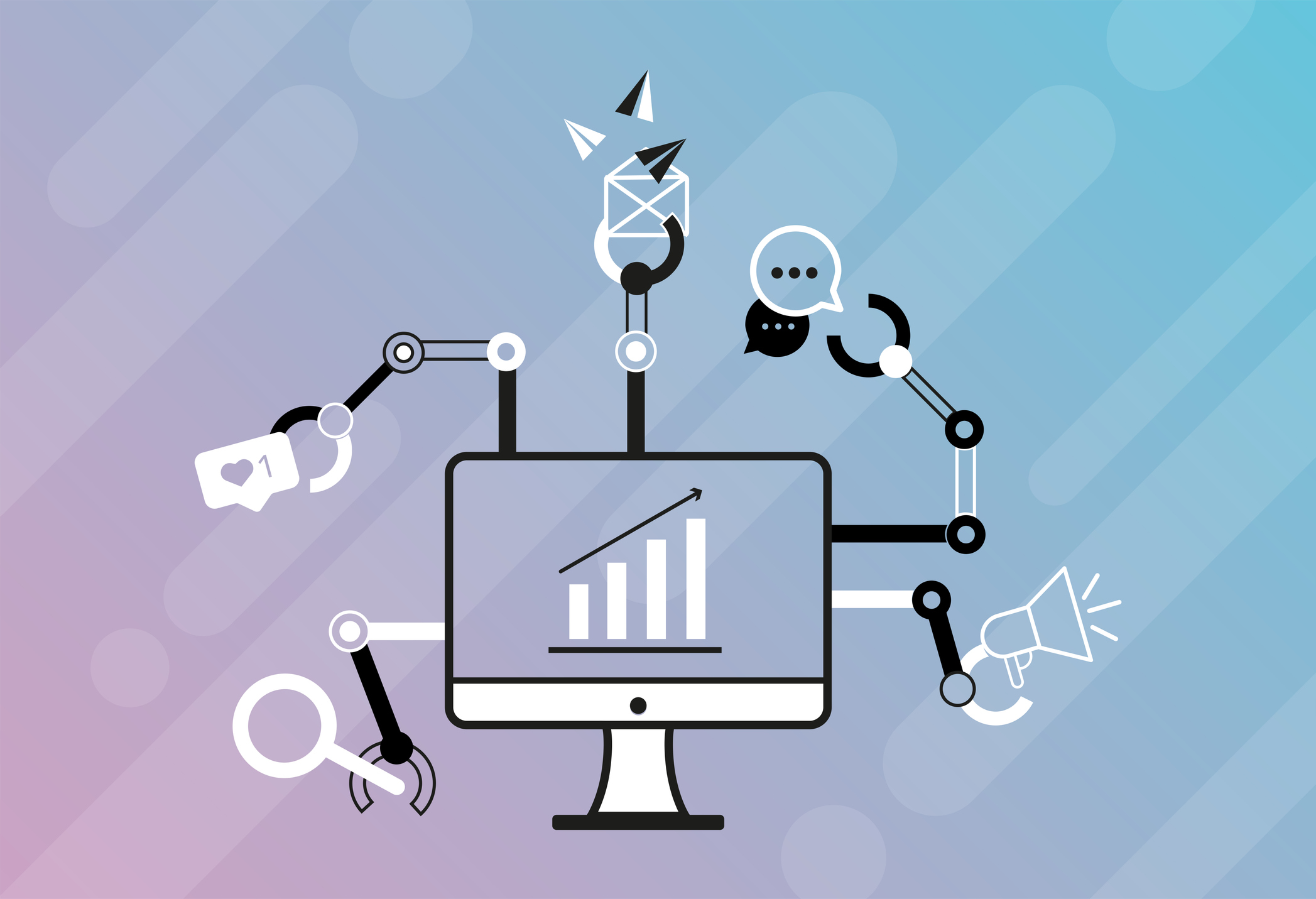
Content marketing automation uses software to automate repetitive marketing tasks like content creation, publishing, analytics, and personalization at scale, reducing manual work and increasing consistency while delivering personalized customer experiences. This powerful toolkit transforms how businesses create, manage, and distribute content by streamlining workflows, tracking performance in real time, and enabling strategic growth through automated systems that handle the heavy lifting of modern marketing operations.
Over my 20 years as CEO of Complete Controller, I’ve watched countless businesses struggle with content overload—trying to juggle blog posts, social media updates, email campaigns, and analytics reporting while still finding time for strategic planning. The game-changer? Content marketing automation, which has allowed our clients across all sectors to reclaim their time and multiply their impact. In this article, you’ll discover how to implement automation tools that save 10-20 hours weekly, learn proven frameworks for scaling campaigns without scaling headcount, and master the personalization techniques that boost engagement rates by up to 320 percent.

What is content marketing automation and how can it elevate your strategy?
- Content marketing automation uses software to automate content creation, publishing, analytics, and personalization at scale, reducing manual work and increasing consistency
- Automation streamlines busywork like social media posts, email sends, and reporting, freeing your team for creativity and strategy
- Platforms offer integrated dashboards, templates, AI tools, and workflow builders for seamless campaign management and measurement
- Personalization algorithms analyze user behavior, enabling tailored content delivery that boosts engagement and conversions
- Data-driven automation provides faster insights for agile decision-making, letting you optimize campaigns and maximize ROI
The Fundamentals of Content Marketing Automation
Content marketing automation refers to platforms and tools designed to automate key functions in the content lifecycle—creation, management, publishing, distribution, and analysis—while minimizing human input. These sophisticated systems go beyond simple scheduling tools to create interconnected ecosystems that transform how marketing teams operate.
Modern automation platforms integrate multiple components working in harmony. At the foundation sits customer data management, which collects and organizes information about your audience’s behaviors, preferences, and engagement history. Above this, content creation tools leverage AI to generate drafts, optimize headlines, and repurpose existing content across formats. The publishing layer coordinates distribution across email, social media, blogs, and emerging channels, while analytics engines track performance metrics in real time.
How automation improves workflow efficiency
The impact on productivity is immediate and measurable. Marketing teams report saving an average of 2.3 hours per campaign through automation, with some organizations reclaiming 20 or more hours weekly. These time savings compound across multiple campaigns and channels throughout the year.
Rather than manually posting to social media at optimal times across different time zones, automation handles scheduling based on audience activity patterns. Email campaigns trigger automatically based on user behaviors instead of requiring manual list segmentation and sending. Reports generate themselves, pulling data from multiple sources into unified dashboards that update in real time.
Main components of a content marketing automation stack
A comprehensive automation stack includes several essential elements working together:
- AI-powered content creation tools that generate initial drafts, suggest headlines, and adapt content for different channels
- Automated scheduling and publishing systems for coordinating multi-channel campaigns across social media, email, blogs, and SMS
- Analytics dashboards and reporting engines that track engagement, conversions, and ROI across all marketing activities
- Personalization engines that customize content delivery based on individual user behaviors and preferences
- Integration platforms that connect disparate marketing tools into unified workflows
Essential Content Marketing Automation Tools for 2025
Selecting the right automation tools determines the success of your content marketing transformation. The market offers solutions for every business size and budget, from comprehensive enterprise platforms to specialized tools for specific functions.
Top platforms for founders and small businesses
- HubSpot Marketing Hub leads the market with its all-in-one approach, combining CRM integration, email marketing, social media management, and robust analytics. While premium pricing may challenge smaller budgets, the platform’s comprehensive functionality often justifies the investment through efficiency gains and improved conversion rates.
- Zapier serves as the Swiss Army knife of automation, connecting over 8,000 applications to create custom workflows. This platform excels at bridging gaps between specialized tools, enabling sophisticated multi-channel campaigns without requiring technical expertise or custom development.
- ActiveCampaign delivers enterprise-level features at mid-market prices, with particular strength in AI-driven campaign optimization and advanced audience targeting. The platform’s machine learning capabilities continuously improve campaign performance by analyzing what works and automatically adjusting future communications.
- Mailchimp remains the go-to choice for businesses beginning their automation journey, offering intuitive interfaces and affordable entry points. While less sophisticated than enterprise platforms, Mailchimp provides essential automation capabilities that meet most small business needs.
- ContentStudio and SocialBee specialize in social media automation, streamlining the creation, scheduling, and analysis of social content across multiple platforms. These tools particularly benefit businesses managing numerous social accounts or posting frequently across channels.
Tool selection tips
Platform selection requires careful evaluation of multiple factors:
- Business scale and growth trajectory influence whether to invest in enterprise platforms with room to grow or start with affordable solutions that meet immediate needs. Consider not just current requirements but anticipated needs over the next 2-3 years.
- Integration capabilities determine how well new tools work with existing systems. Fragmented platforms that don’t share data create operational friction and limit personalization effectiveness. Prioritize platforms with robust APIs and pre-built integrations.
- Feature depth versus usability presents a common trade-off. More sophisticated platforms offer greater capabilities but require longer learning curves. Balance your team’s technical expertise against desired functionality when making selections.
- Reporting and analytics sophistication varies dramatically between platforms. Basic tools provide simple metrics like open rates and clicks, while advanced platforms offer attribution modeling, predictive analytics, and custom reporting capabilities.
Accelerating ROI: How Automation Drives Business Results
The financial case for content marketing automation has become undeniable, with organizations reporting average returns of $5.44 for every dollar invested over three years—a 544 percent ROI that far exceeds traditional marketing investments.
Cost and time advantages
Beyond direct financial returns, automation dramatically reduces operational costs while improving output quality. Marketing departments report 12 percent average cost reductions through automation, primarily through reduced manual labor and fewer errors requiring correction.
Time savings represent perhaps the most valuable benefit. Small businesses using marketing automation save 10 or more hours weekly, with some reporting up to 18.7 hours reclaimed. Agencies implementing comprehensive automation have documented savings exceeding 12,000 hours annually.
These recovered hours translate directly into competitive advantage. Teams redirect saved time toward strategic planning, creative development, and relationship building—activities that differentiate exceptional marketing from adequate execution.
Enhanced creativity and productivity
Automation liberates marketing teams from repetitive tasks that stifle creativity. Instead of manually scheduling posts or compiling reports, professionals focus on storytelling, campaign strategy, and innovation.
The psychological impact proves equally important. Team members report higher job satisfaction when freed from mundane tasks to pursue intellectually engaging work. This improved morale translates into better retention, stronger performance, and more innovative marketing approaches.
Personalized content experiences
Personalization powered by automation delivers extraordinary engagement improvements. Automated emails generate 320 percent more revenue than non-automated messages, with open rates reaching 48.57 percent compared to 25.2 percent for manual campaigns.
These improvements stem from behavioral triggers that deliver relevant content at optimal moments. Abandoned cart emails achieve 10.5 percent conversion rates through timely, personalized follow-up. Dynamic content adapts messaging based on user preferences, past purchases, and browsing behavior.
AI-driven personalization takes customization further, analyzing hundreds of signals to predict what content will resonate with each individual. Organizations implementing AI-powered personalization report 58 percent higher customer loyalty and 60 percent increased engagement rates.

Building a Foolproof Automation Strategy: The 90-Day Roadmap
Success with content marketing automation requires methodical implementation rather than attempting everything simultaneously. This phased approach, refined through helping hundreds of businesses at Complete Controller, delivers consistent results.
Step 1: Audit your existing content and manual workflows
Document every content-related task your team performs, noting time requirements, repetition frequency, and business impact. Include approval processes, reporting compilation, and list management alongside obvious marketing activities.
Step 2: Select automation tools that align with your goals and scale
Match platform capabilities to your prioritized automation opportunities. Start with tools addressing your highest-impact, most time-consuming tasks rather than chasing comprehensive solutions that overwhelm your team.
Step 3: Pilot automated workflows (blog, email, social)
Begin with one or two use cases where success can be demonstrated quickly. Email automation typically offers the best starting point, with mature technology, proven ROI, and manageable complexity.
Step 4: Track results with integrated analytics
Establish baseline metrics before automation, then monitor improvements in productivity (hours saved), efficiency (cost per lead), quality (error rates), and outcomes (revenue, conversions). Use data to refine workflows and identify expansion opportunities.
Step 5: Iterate, optimize, and scale automation further
After proving initial success, expand into additional channels and more sophisticated capabilities. Add behavioral triggers, dynamic personalization, and predictive analytics as your team develops platform expertise.
Pro Tip from Jennifer: “We started with social and email automation, tracked engagement, and saw a 40% time saving within one quarter. Build gradually and celebrate early wins.”
Real-World Impact: Case Study of Automated Content Success
Case study: AirBnB’s automation-driven content expansion
AirBnB leveraged AI marketing tools and workflow automation to scale their blog, social, and email campaigns globally. The strategy allowed localized storytelling, rapid asset production, and deeper user segmentation—resulting in a 22% lift in user engagement and notable growth in direct bookings.
The company’s automation journey began with content creation challenges across multiple markets and languages. Manual processes couldn’t scale to meet demand for localized, relevant content that resonated with diverse global audiences.
By implementing AI-powered content generation and automated translation workflows, AirBnB dramatically increased content output while maintaining quality. Behavioral triggers personalized email campaigns based on browsing history, past bookings, and stated preferences.
The results demonstrated automation’s transformative power. Beyond the 22 percent engagement improvement, the company reduced content production time by 60 percent and increased email campaign effectiveness by 35 percent through improved targeting and timing.
Final Thoughts: Your Automation Journey Starts Now
Content marketing automation represents more than technological advancement—it’s a strategic imperative for businesses seeking sustainable growth without proportional resource increases. The combination of time savings, improved ROI, and enhanced customer experiences creates compelling advantages that compound over time.
As the founder of Complete Controller, I’ve seen automation transform our brand’s agility, content consistency, and client relationships. The key is starting with your biggest pain point—then automating boldly and measuring rigorously. Whether you’re drowning in social media management or struggling with email campaign performance, the right automation strategy can revolutionize your marketing effectiveness.
Take action today by auditing your current processes and identifying where automation could deliver immediate impact. Visit Complete Controller for expert guidance on designing your automation-enabled content strategy and discovering how our financial expertise can support your growth journey.

Frequently Asked Questions About Content Marketing Automation
What exactly is content marketing automation and how does it differ from regular marketing?
Content marketing automation uses software platforms to handle repetitive marketing tasks automatically—like scheduling social posts, sending targeted emails, and generating reports—while regular marketing requires manual execution of each task. The key difference is that automation works 24/7 without human intervention, personalizing content delivery based on user behaviors.
Which marketing tasks should I automate first for maximum impact?
Start with email marketing automation, as it typically delivers the fastest ROI with manageable complexity. Follow with social media scheduling to ensure consistent posting across time zones. After mastering these basics, add lead scoring, behavioral triggers, and dynamic content personalization.
How much does marketing automation software typically cost for small businesses?
Entry-level platforms like Mailchimp start around $20-50 monthly for basic automation features. Mid-tier solutions like ActiveCampaign range from $100-500 monthly depending on contacts and features. Enterprise platforms like HubSpot begin around $800 monthly but offer comprehensive functionality.
Can marketing automation work effectively for B2B service companies?
Absolutely—B2B companies often see even stronger results than B2C due to longer sales cycles that benefit from automated nurturing. Lead scoring helps identify sales-ready prospects, while automated content delivery educates buyers throughout their journey. Many B2B firms report 451% more qualified leads through automated nurturing.
What are the biggest mistakes companies make when implementing marketing automation?
The most common pitfalls include trying to automate everything at once, neglecting proper team training, failing to maintain updated customer data, and setting up automation without clear goals or metrics. Start small, invest in training, ensure data quality, and always tie automation to specific business objectives.
Sources
- Brandfolder. “What is Content Automation? Benefits, Tips, and Examples.” www.brandfolder.com
- MarketerMilk. “26 best AI marketing tools I’m using to get ahead in 2025.” www.marketermilk.com
- Adobe for Business. “Content automation — the what, why, and how.” business.adobe.com
- Adam Connell. “12 Top Social Media Automation Tools (2025 Pros & Cons).” adamconnell.me
- SharpSpring. “What is Content Automation? The Definition and Benefits.” sharpspring.com
- Zapier. “9 best marketing automation software tools in 2026.” zapier.com
- Agility CMS. “Content Automation, What are the Benefits?” agilitycms.com
- Munro Agency. “Top 12 Marketing Automation Software.” munro.agency
- Salesforce. “Benefits of Marketing Automation.” salesforce.com
- Akkio. “42 Best Content Automation Tools to Upgrade Your Workflow.” akkio.com
- Sembly AI. “Benefits of Marketing Automation: 9 Reasons to Embrace It.” sembly.ai
- Learn G2. “Best Marketing Automation Software.” learn.g2.com
- The CMO. “11 Benefits of Marketing Automation Backed By Data.” thecmo.com
- Salesforce. “Marketing Automation Tools: Benefits & Key Features.” salesforce.com
- HubSpot. “What is Marketing Automation?” hubspot.com
 About Complete Controller® – America’s Bookkeeping Experts Complete Controller is the Nation’s Leader in virtual bookkeeping, providing service to businesses and households alike. Utilizing Complete Controller’s technology, clients gain access to a cloud platform where their QuickBooks™️ file, critical financial documents, and back-office tools are hosted in an efficient SSO environment. Complete Controller’s team of certified US-based accounting professionals provide bookkeeping, record storage, performance reporting, and controller services including training, cash-flow management, budgeting and forecasting, process and controls advisement, and bill-pay. With flat-rate service plans, Complete Controller is the most cost-effective expert accounting solution for business, family-office, trusts, and households of any size or complexity.




 Brittany McMillen
Brittany McMillen
Brittany McMillen