


Cannabis Packaging Selection Tips:
3-Step Guide
Cannabis packaging selection tips come down to three core moves: match your materials to the product format, design labels that are both compliant and on-brand, and build storage and closure systems that protect potency while meeting child-resistant rules. When you treat packaging as a safety, compliance, and brand asset—not an afterthought—you avoid costly relabeling, product loss, and failed inspections that quietly drain your margins.
After more than 20 years leading Complete Controller and supporting clients across nearly every regulated industry you can name, I’ve watched smart operators lose tens of thousands of dollars over “small” packaging mistakes. Here’s the truth I wish more cannabis founders heard early: packaging is a finance decision as much as a branding one. In this guide, I’ll share a simple 3-step framework you can use to choose the right materials, labels, and storage systems—without blowing your budget, your timeline, or your compliance status. You’ll walk away with practical criteria, a CFO-grade lens on packaging spend, and the confidence to make decisions that scale.
What are the most important cannabis packaging selection tips and how do you get them right?
- Choose packaging that fits your product type, protects quality, and meets child-resistant and regulatory requirements, then layer in strong branding, clear labels, and proper storage to maintain potency and consumer trust.
- Start with product-first material selection so flower, edibles, vapes, and concentrates each get the protection they need.
- Build regulatory-compliant, COA-ready label design with room for warnings, cannabinoid content, batch data, and child-resistant symbols.
- Implement child-resistant packaging that stays senior-accessible and blocks light, air, heat, and moisture.
- Future-proof with sustainable, GMP-aware choices and a supplier strategy that controls SKUs and per-unit cost.

Step 1: How to Choose Cannabis Packaging Materials That Actually Protect Your Product
Your first decision is what your product is going into; every other cannabis packaging selection tip depends on getting this right. Material choice drives shelf life, perceived value, freight cost, and compliance risk all at once.
Matching cannabis packaging to product format
Choosing the best materials for cannabis containers starts with product chemistry and physical form. Different product types demand different protection strategies.
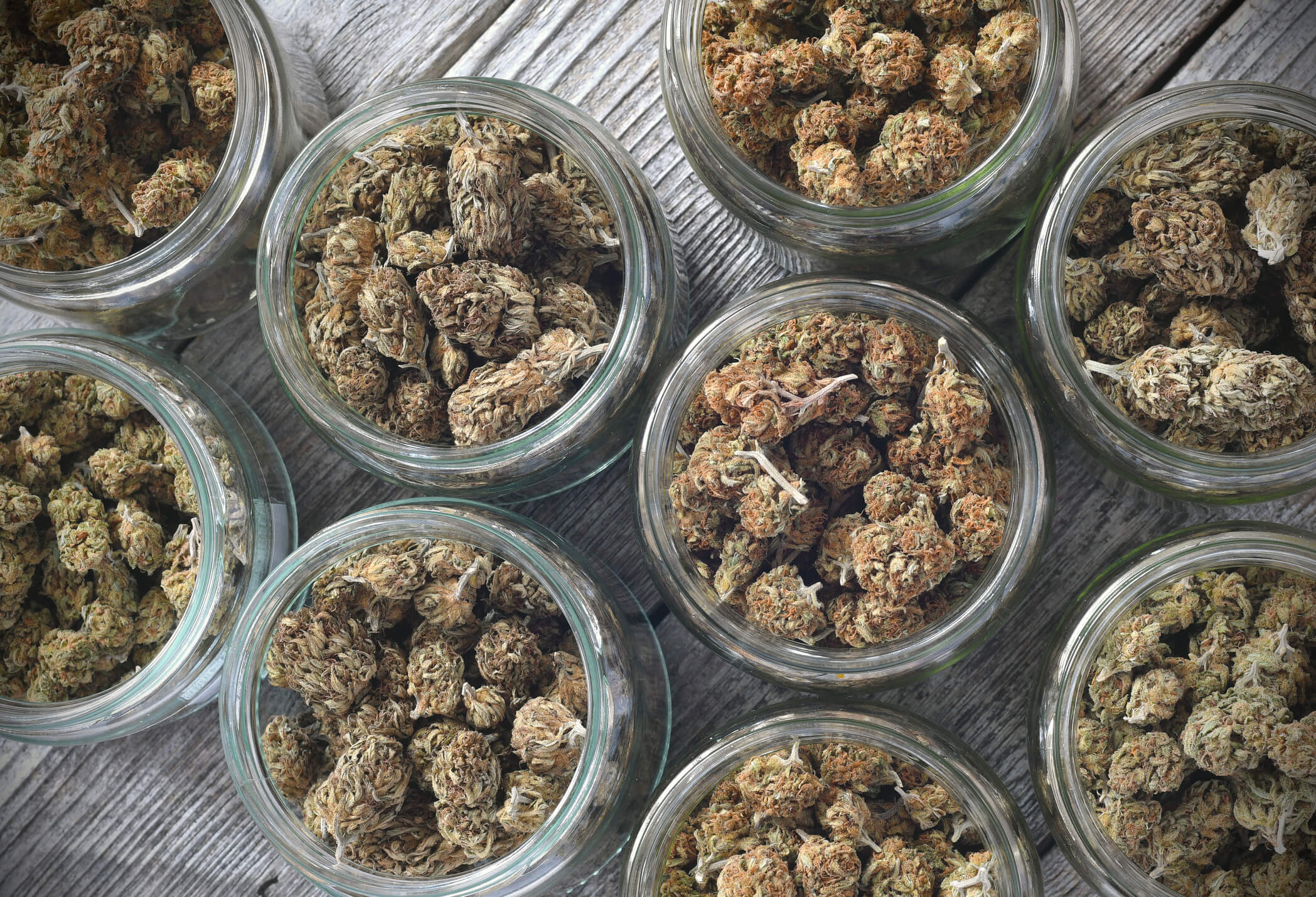
- Flower: Glass jars or high-barrier rigid plastics protect trichomes; airtight closures preserve terpenes.
- Edibles: Food-safe plastics or foil-lined pouches with strong oxygen and moisture barriers, often with desiccant packs.
- Concentrates: Glass is preferred—non-reactive and pure. Some cannabis oils dissolve reactive plastics.
- Vapes: Blister packs or paperboard cartons with airtight hardware inside.
- Pre-rolls: Tubes or GRIP ‘N PULL bags that protect shape and odor.
Key material trade-offs: Glass feels premium but adds freight cost. Rigid plastics (HDPE, PET, PP) are lightweight and recyclable. Paperboard is great for branding but should wrap an airtight primary container, not replace one.
Child-resistant cannabis packaging requirements
Any child-resistant cannabis packaging requirements you meet must align with your jurisdiction’s certified standards. The stakes here are real—not just regulatory, but human.
A CDC study found that 1,466 children under 6 visited U.S. emergency departments for cannabis edible ingestions between 2017 and 2021, with rates climbing more than 1,300%. Washington State data published in JAMA Pediatrics showed a 45% drop in poison-center calls for pediatric exposures after the state required child-resistant packaging in 2016. Compliant closures genuinely reduce harm.
Most regulations require certified mechanisms (push-and-turn, push-and-slide, GRIP ‘N PULL), tamper-evident features, and opaque designs for infused edibles. Senior accessibility matters too—test that first to find the right balance.
Sustainable packaging choices
Sustainable packaging is no longer optional. Customers notice, and regulators increasingly reward waste reduction. Recycled plastics, recycled paperboard, and refillable glass jars all work—but never sacrifice child resistance to “go green.” Committing volume across SKUs to one vetted sustainable supplier lowers unit cost and tightens your brand story.
Smart packaging starts with smart financial decisions. See how Complete Controller helps cannabis businesses grow with confidence.
Step 2: Cannabis Packaging Selection Tips for Branding, Label Design, and Compliance
Once materials are locked in, your packaging needs to speak your brand language and keep regulators happy. This is where most relabeling disasters originate.
Packaging design as a branding asset
Strong packaging design turns your container into a touchpoint for loyalty. Stay functional, visually distinctive, and consistent across SKUs. Think about buyer personas (medical vs. adult-use, premium vs. value) and shelf differentiation through shape and finish—without violating “not appealing to children” restrictions.
Compliant cannabis label design and placement
Compliant cannabis label design and placement is a common failure point that triggers recalls. At minimum, you’ll need space for:
- Product name, type, and net weight
- THC/CBD content per package and per serving
- Batch/lot number and pack or expiration date
- Universal warning symbols and state-mandated warnings
- License number, origin, and QR access to your COA
Operational tip: Before approving a container, mock up a full-size label with every required element, print it, and physically wrap it to check legibility and fit. This one habit has saved my clients tens of thousands in scrapped label runs.
Regulatory compliance and GMP packaging
Building GMP packaging discipline means documented specifications, change control, supplier qualifications, and SOPs for label application and lot coding. Every packaging-related deviation has a ripple effect on inventory valuation, revenue recognition, and cash flow. Treat packaging as part of your internal controls, not a marketing line item. For more on regulated business workflows, see our guide to marijuana business procedures.
Step 3: Storage, Logistics, and Real-World Workflow
The third step is often missing from basic guides—how packaging behaves in storage, transport, and the dispensary.
Protecting potency
Proper storage keeps your packaging investment from being undermined by environmental exposure. The science is clear: a peer-reviewed study in the Journal of Pharmaceutical Sciences found THC in cannabis oil dropped roughly 87% under light exposure over four years, compared to 63% in dark storage. Opaque containers and light control are non-negotiable for potency.
Key threats are light, oxygen, heat, and humidity. Use airtight jars for flower, barrier films and desiccants for edibles, and small airtight glass for concentrates with minimal headspace. Guidance from the U.S. FDA on food labeling and nutrition is also useful when infused products cross over into food-style packaging requirements.
Child-resistant packaging in daily operations
Child-resistant packaging has to work for production staff, dispensary teams, and end users. Pop-tops, push-and-turn containers, GRIP ‘N PULL bags, and child-resistant cartons each have a place. For high-volume SKUs, choose closures that can be machine-applied with obvious visual cues when properly sealed. Map your packaging line and measure throughput per hour before locking in complex closures—every extra second is labor cost. The U.S. Consumer Product Safety Commission’s child-resistant packaging guidance is a solid reference point.
Mini case study: Sustainable packaging at illicit gardens
Missouri-based Illicit Gardens shifted toward post-consumer glass for premium flower, reusable tins for pre-rolls, and cardboard for compatible SKUs. By consolidating purchasing with one vetted supplier, they reduced single-use plastic, lowered per-unit cost through volume commitments, and differentiated through a credible sustainability story tied to QR-linked content.
Where Cannabis Packaging Meets Your P&L
Most guides stop at compliance; few connect packaging to cash flow. Standardize container sizes to gain buying power and simplify inventory. Design label real estate with a compliance buffer so future warnings don’t trigger full reprints. For more on trimming production costs, our piece on how to cut custom assembly costs offers a useful framework.
Clear, COA-linked labels and thoughtful closures build trust in a category where buyers still feel risk—and trust is what compounds into brand equity.
Final Thoughts: Your 3-Step Cannabis Packaging Playbook
- Choose protective, compliant materials matched to your product type, prioritizing safety and sustainability.
- Design COA-ready, brand-aligned labels with enough space for required data and future regulatory shifts.
- Implement storage and operational systems that preserve potency and support production efficiency.
As a founder, I see cannabis packaging as a three-way balancing act between compliance, customer experience, and financial performance. When those three click, packaging stops being a cost center and becomes a driver of brand equity and profitability. If you want help mapping these decisions into clean financials and scalable processes, my team at Complete Controller is ready to help.

Frequently Asked Questions About Cannabis Packaging Selection Tips
What is the best packaging for cannabis flower?
Airtight glass jars or rigid high-barrier plastic containers are the gold standard—they protect trichomes from crushing and shield product from light and oxygen. High-quality mylar stand-up pouches can work for larger volumes when sealed properly.
How do I choose child-resistant cannabis packaging?
Pick certified designs (push-and-turn, push-and-slide, pop-tops, or GRIP ‘N PULL bags) that meet your state’s testing standards, then verify senior accessibility. Always get supplier documentation and test with real staff and customers before full rollout.
What should be included on a cannabis product label?
At minimum: product name and type, net weight, THC and CBD content per serving and per package, batch number, manufacturer and license info, universal warning symbols, and state-mandated health warnings. Add a QR code linking to your COA and terpene profile.
How can I make my cannabis packaging more sustainable?
Use recycled or recyclable plastics, recycled paperboard, and reusable glass jars. Trim unnecessary inserts and partner with eco-focused suppliers. Telling the sustainability story on-pack and via QR codes helps align with consumer values.
Why is opaque packaging required for some cannabis products?
Many jurisdictions require opaque packaging for infused edibles so they don’t resemble candy and reduce accidental pediatric ingestion risk. Opaque packaging also protects potency by blocking light degradation of cannabinoids.
Sources
- Acme Vial & Glass. (2023). “The Ultimate Cannabis Packaging Design Guide.” https://www.acmevial.com
- Allpack Supply. (2022). “5 Innovative Cannabis Packaging Ideas for Dispensary Growth.” https://www.allpacksupply.com
- Atlantic Packaging. “Sustainable Cannabis Packaging Solutions.” https://www.atlanticpkg.com
- Craig, David. (2021). “6 Sustainable Packaging Tips for Cannabis Growers.” Cannabis Business Times. https://www.cannabisbusinesstimes.com
- ElSohly, Mahmoud A., et al. (1999). “Stability of Δ9-Tetrahydrocannabinol (THC) in Cannabis Resin and Dronabinol.” Journal of Pharmaceutical Sciences. https://doi.org/10.1021/js980485d
- Le, Thanh H., et al. (June 17, 2022). “Pediatric Emergency Department Visits for Cannabis Edible Ingestions.” MMWR (CDC). https://www.cdc.gov/mmwr/volumes/71/wr/mm7124a3.htm
- National Institutes of Health / NCBI. “Cannabis Storage and Environmental Exposure Effects.” https://www.ncbi.nlm.nih.gov/pmc/articles/PMC5549281/
- Thomas, D. G., et al. (2020). “Association of Statewide Regulation of Cannabis Edibles With Poison Center Calls for Pediatric Exposures.” JAMA Pediatrics. https://jamanetwork.com/journals/jamapediatrics/fullarticle/2762866
- U.S. Consumer Product Safety Commission. “Child-Resistant Packaging — Business Guidance.” https://www.cpsc.gov/Business–Manufacturing/Business-Education/Business-Guidance/Child-Resistant-Packaging
- U.S. Food and Drug Administration. “Food Labeling and Nutrition.” https://www.fda.gov/food/food-labeling-nutrition
- Complete Controller. “Efficient Business Finance Management.” https://www.completecontroller.com/efficient-business-finance-management/
- Complete Controller. “Marijuana Business Procedures.” https://www.completecontroller.com/marijuana-business-procedures/
- Complete Controller. “Cut Custom Assembly Costs: 5 Ways.” https://www.completecontroller.com/cut-custom-assembly-costs-5-ways/
 About Complete Controller® – America’s Bookkeeping Experts Complete Controller is the Nation’s Leader in virtual bookkeeping, providing service to businesses and households alike. Utilizing Complete Controller’s technology, clients gain access to a cloud platform where their QuickBooks™️ file, critical financial documents, and back-office tools are hosted in an efficient SSO environment. Complete Controller’s team of certified US-based accounting professionals provide bookkeeping, record storage, performance reporting, and controller services including training, cash-flow management, budgeting and forecasting, process and controls advisement, and bill-pay. With flat-rate service plans, Complete Controller is the most cost-effective expert accounting solution for business, family-office, trusts, and households of any size or complexity.



 Brittany McMillen
Brittany McMillen
Brittany McMillen